
Strength at Every Age (And Why It Matters More Than You Think)
We all lose muscle with age – this is why that matters and what you can do about it.
If someone asked you to name the single most important thing you could do for your health — not just now, but over the next 10, 20, 30 years — what would you say? Most people would guess cardio. Running, cycling, even walking. And cardio is very good for you, and those things are brilliant forms of exercise. But there’s something that most of us overlook that probably matters just as much, possibly even more.
Strength training. Or resistance training, as it’s sometimes called. And before you picture a gym full of people in not-very-much hefting heavy barbells about — it’s not that (unless you want it to be!).
Resistance training simply means working your muscles against a force — whether that’s your own bodyweight, using tools like resistance bands, or weights or gym machines. For example lunges or push ups are strength training, as is a barbell squat, or using the leg press machine. However you want to approach it, it doesn’t need to have complicated equipment, and it can be adapted for all ages and fitness levels. It’s arguably more important that you do it than how you do it.
Why?

Strength is about so much more than muscle
When people think about strength training, they tend to think about it in terms of how it looks. Bigger arms. A flatter stomach. But the benefits of regular resistance exercise go way beyond appearance — and most of them are things you’d genuinely notice in your day-to-day life. Like, for example:
Your metabolism. Muscle burns more calories than fat, even when you’re doing nothing. Building and maintaining muscle means your body is working harder for you around the clock. Research has shown resting metabolic rate increases by around 7% with consistent strength training — which is a meaningful difference when it comes to managing weight over time.
The middle-age spread. This is a big one. That gradual shift in body shape that seems to happen to everyone in their 40s and 50s? It’s largely down to losing muscle and replacing it with fat — even if your weight on the scales stays roughly the same. Carrying an excess of fat around your middle has serious health implications. Strength training is one of the most effective things you can do to counteract it.
Your sleep. Studies have consistently shown that people who do regular strength training sleep better — falling asleep faster, staying asleep longer, and waking up feeling more rested. A large study of over 23,000 adults found that including resistance training in your week made a noticeable difference to sleep quality compared to not doing it.
Your mood. Exercise positively influences your mood. A major review of 33 clinical trials found that strength training significantly reduced symptoms of depression — and the improvements were there regardless of age, gender, or how fit people were to start with. You didn’t even need to get stronger for it to work. Simply doing the exercise was enough.
Your blood sugar. Muscle is the body’s main storage facility for glucose. The more muscle you have, the better your body is at mopping up excess sugar from your blood after you eat. Research has found that women who did regular strength training were 30% less likely to develop type 2 diabetes over a 10-year period. That’s not a small number.
Your brain. This one surprises a lot of people. But strength training has been shown to improve memory, attention and decision-making — and in one study, people who did weight training scored significantly better on cognitive tests at the end of the programme, and still held onto that improvement a year later.
Your bones. Bones respond to load — the more you put through them, the stronger they get. Strength training is one of the most effective ways to build and maintain bone density, which becomes increasingly important as we age and the risk of osteoporosis rises.
It doesn’t have to mean the gym (if you don’t want it to)
Strength training sounds like it belongs in a gym, with heavy equipment and people who lead a certain lifestyle. And if that’s your thing, brilliant. But it doesn’t have to be.
Resistance training is any activity that works your muscles against some kind of resistance. That can include weights and machines — but also resistance bands, bodyweight exercises, and, to be honest, probably already includes a lot of the physical activities you might already be doing without thinking about it.
Getting up from a chair and sitting back down is a strength exercise. Carrying shopping is a strength exercise. Gardening, climbing stairs, walking uphill — all of it counts. The difference between that and actually training your strength is just a bit more intention and a bit more regularity. Doing it consistently, with a little bit of challenge – and ideally increasing that challenge over time – is what triggers the changes.
And it doesn’t take long. Research suggests that two or three sessions a week, even short ones, is enough to see real benefits. So you’re not committing to hours at the gym, you’re committing to a regular habit with minimal inconvenience that pays you back in a dozen different ways.

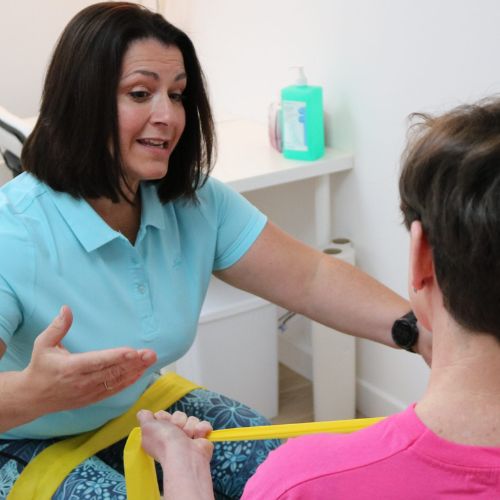
Want support getting started? Our exercise classes are designed exactly for this
If the idea of figuring out where to start feels a bit daunting — or if you’ve got a health condition, an old injury, or you’ve just been out of the habit for a while — our exercise therapy classes are a genuinely good option.
They’re not a normal fitness class. They’re small, relaxed group sessions designed by physiotherapist Sakshi and trainer Rachael, who has 18 years of experience and specialist qualifications in exercise referral and cardiac rehab. Everyone gets assessed at the start and end of each 10-week block, and the whole thing is set up so you progress at your own pace without anyone pushing you harder than you’re comfortable with.
There are two levels:
- From the Chair is for anyone who wants to start gently. Chair-based exercises might sound like they’re not doing much, but they’re surprisingly effective at building everyday functional strength, improving circulation and flexibility, and just getting your body used to moving again.
- Beyond the Chair takes things further with a combination of seated and standing exercises, balance work, and the kind of functional strength that makes everyday tasks feel easier.
Classes are on Tuesdays and Thursdays at The Bridge (Helensburgh Parish Church Hall). The full 10-week programme — including your assessments and 20 sessions — is £160, which works out to £8 a session. And because they’re part of what we do here at The Lomond Clinic, if you’re seeing anyone else here for treatment, your exercise programme can be tailored to fit in with that too.
Find out more about classes or give us a call to have a chat about whether they might suit you.

Already training? Physio can help
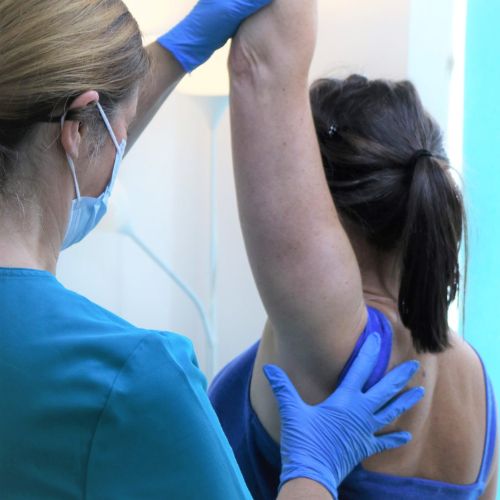
If you already train or do sport, our physiotherapy and sport rehab team might be able to help. If you’ve an injury or have a problem that’s been getting in the way of you being active — or that’s been quietly limiting what you can do without you quite admitting it — it’s worth getting it sorted. The longer these things hang around, the harder they tend to be to fix.
Our physios and sports rehab team work with people at all levels — from athletes coming back from serious injuries to people who just want to get back to doing things they enjoy without pain. They’ll assess what’s actually going on (not just guess), work out the best approach, and put together a plan that gets you moving again properly.
Even if you don’t have an injury, there are ways we can help you prepare for races or events, or generally perform better. All of our team have considerable knowledge and experience working with high-level sportspeople and athletes, and we can assess and advise including using advanced gait analysis (Footscan) and custom orthotics (Phits) to identify movement inefficiencies and make practical improvements that translate directly into better performance.
Small changes, big impact
If you already do some sort of strength training, that’s great. Remember to keep making it challenging so that you reap the most benefits from it. But if you’re new to this and not quite sure where to start, please know that you don’t need to do anything dramatic. Small, regular changes and consistency are what make the difference.
Here are a few things you could try this week to get started:
- Stand up and sit down from a chair 10 times in a row. Sounds daft, but it works. Do it a few times a week and you’ll notice a difference in a couple of weeks. Bonus points if you don’t make an ooft sound while you do it!
- Take the stairs. Every time. Even if it’s just one flight.
- Carry the shopping rather than using a trolley, if you can do it safely.
- Do a few wall press-ups. While you’re waiting for the kettle to boil, or after brushing your teeth – whenever you’ll actually remember.
- Go for a walk at lunchtime, and walk a bit further than you did last time. Not miles further, just a bit.
None of these will change your life overnight. But do them consistently, and you will feel stronger. And better.
Need some help or advice?
Give us a call on 01436 672677, book an appointment online, or see more about all of our physio and sports rehab services.
If you’d like to read up on any of this, here are some of the sources we used:
- Muscle loss/sarcopenia PMC — “Muscle tissue changes with aging”: https://pmc.ncbi.nlm.nih.gov/articles/PMC2804956/
- Metabolism (7% resting metabolic rate increase) PubMed — resistance training in 50–65 year old men: https://pubmed.ncbi.nlm.nih.gov/8175496/
- Sleep (23,000 adults study) PubMed — Kovacevic et al. systematic review: https://pubmed.ncbi.nlm.nih.gov/28919335/
- Depression (33 clinical trials meta-analysis) JAMA Psychiatry — Gordon et al. 2018: https://jamanetwork.com/journals/jamapsychiatry/fullarticle/2680311
- Diabetes risk (30% reduction in women over 10 years) PMC — Shiroma et al., Women’s Health Study: https://pmc.ncbi.nlm.nih.gov/articles/PMC5161704/
- Cognitive function PubMed — “Improving cognitive and physical function through 12 weeks of resistance training”: https://pubmed.ncbi.nlm.nih.gov/32731786/
Join our mailing list
We are a well-established multi-disciplinary health clinic on the seafront of Helensburgh. Join our mailing list to get all the latest news and updates directly to your inbox!