
Managing distress from disturbing memories with EMDR
Clinical Psychologist Dr Kathryn Smith explains EMDR, a technique that has been found to relieve distress associated with disturbing memories or emotions.
Dr Smith practices as Lomond Psychology, and holds appointments at The Lomond Clinic on Thursdays.
See more about Clinical Psychology | See more about Dr Smith | See more about Mental Health Services at The Lomond Clinic

What is EMDR?
EMDR stands for Eye Movement Desensitisation Reprocessing. It is a technique that has been found to relieve the distress associated with disturbing memories or emotions. It involves recalling an event that was traumatic (this could be anything that was overwhelming for your system, from abuse, an accident to a teacher shouting) while following a side-to-side visual stimulus. The emotional charge of a memory has been found to reduce as it is processed.
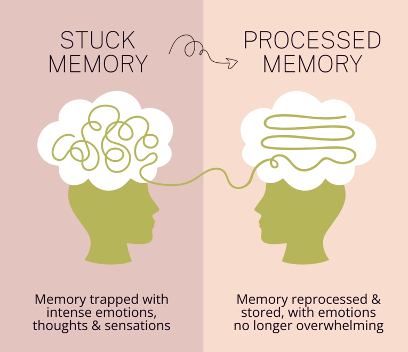
It works off the theory of the Adaptive Information Processing (AIP) model and targets the way a distressing memory is stored in the brain. The assumption is that past disturbing experiences continue to cause distress because they were not adequately processed, and when such memories are triggered in the present, they contain all the same emotions, thoughts, and physical sensations as the initial experience.
Information on the theory of EMDR is explained in this video:
Would I benefit from EMDR?
Many people who have experienced trauma, loss, or ongoing stress find EMDR helpful. It has been widely researched and is recommended by organisations such as the World Health Organization (WHO) and the National Institute for Health and Care Excellence (NICE) for treating post-traumatic stress disorder (PTSD).
However, EMDR isn’t only for trauma. It can also be effective for anxiety, panic attacks, phobias, low self-esteem, and other emotional difficulties that may be linked to past experiences. If you find yourself reacting strongly to certain triggers or struggling to move past memories, EMDR may be worth exploring.
EMDR can also be used with young people and has been shown to be effective (research). This is a helpful animation video for young people:
How do sessions work?
Following an assessment phase where the therapist will gather a history and develop a shared treatment plan, you will start the preparation phase for EDMR. This involves creating safe space, learning techniques to return to a calm state and to hold difficult memories or feelings between sessions.
Once familiar with these techniques you move into the assessment phase where the therapist will guide you through a series of steps to activate the memory or emotion and establish how distressing it is using a rating scale of 0 to 10.
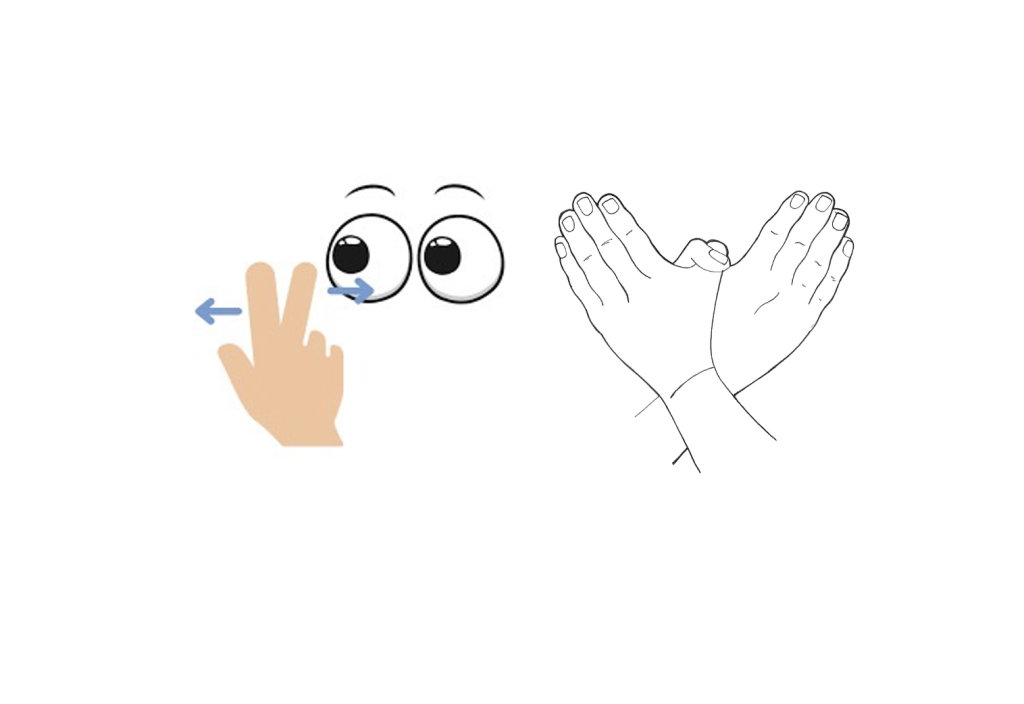
You are then ready to move into the desensitization phase which involves the side-to-side eye movements, known as bilateral stimulation (BLS). For some people the side to side eye-movement can be uncomfortable, and your therapist can offer alternatives such as hand tapping, or butterfly taps. After each BLS, you briefly report what you noticed: thoughts, feelings, images, body sensations and the therapist will guide you. Processing continues until the emotional charge reduces, ideally to 0 or 1. This may need to happen over a number of sessions, which is why it is important that you are familiar with the techniques for retuning to a calm state and holding difficult memories in between sessions.
Can I speak to Dr Smith about EMDR before making an appointment?
Dr Smith would welcome speaking to you about what you are looking for help with and whether or not EMDR would be suitable. You can arrange a 15 minute call via her website: www.lomondpsychology.co.uk
All text and images by Dr Kathryn Smith. For more information or to make an appointment, please contact Dr Smith at www.lomondpsychology.co.uk
Join our mailing list
We are a well-established multi-disciplinary health clinic on the seafront of Helensburgh. Join our mailing list to get all the latest news and updates directly to your inbox!